On this page
A wrong or incomplete invoice can mean a delayed payment or an awkward question later. This guide explains what a GST tax invoice has to show, in plain English, with a worked example you can check yourself.
Rules were checked against the official text on 7 November 2026 and can change. This is general information, not legal, tax or financial advice, so confirm your own situation with a tax professional.
What must a GST tax invoice include?
A GST tax invoice must show who is selling, who is buying, what was sold, the tax charged and a signature. Rule 46 of the CGST Rules is the official list. This table summarises its main items in plain words:
| Item on the invoice | What the rule asks for | Clause |
|---|---|---|
| Supplier | Name, address and GSTIN | (a) |
| Serial number | Consecutive, up to 16 characters, unique for the financial year | (b) |
| Date | The date of issue | (c) |
| Registered buyer | Name, address and GSTIN or UIN | (d) |
| Unregistered buyer | Name, address, delivery address, and state name and code, in the cases below | (e), (f) |
| Code | HSN code for the goods or services | (g) |
| Description | What was supplied | (h) |
| Quantity | For goods, the quantity and unit | (i) |
| Values | The total value, and the taxable value after any discount | (j), (k) |
| Tax | The rate and amount of central, State, integrated or Union territory tax, or cess | (l), (m) |
| Place of supply | The State name, for a sale between States | (n) |
| Delivery address | Where it differs from the place of supply | (o) |
| Reverse charge | Whether tax is payable on reverse charge | (p) |
| Signature | Signature or digital signature of the supplier or authorised representative | (q) |
The rule has further clauses and provisos, including for exports and e-invoices, so read the official text if those apply to you. The government can also specify how many HSN digits a class of business must show, so check the current requirement for yours.
How should you number a GST invoice?
Use a consecutive series of up to 16 characters that does not repeat within a financial year. Rule 46 allows letters, numbers, hyphens and slashes, and you can run more than one series.
For example, INV/26-27/001 has 13 characters and fits the rule. Many businesses include the financial year, because it makes each number easy to keep unique when the year changes. Avoid other symbols and spaces, because they are outside the characters the rule lists.
What details are needed for an unregistered customer?
It depends on the value. Where the customer is unregistered and the taxable value is fifty thousand rupees or more, Rule 46 asks for their name and address, the delivery address, and the State name and code.
Below that value, those details are needed if the customer asks for them to be recorded. A separate proviso covers certain online and e-commerce services, so check the rule if you sell those.
How do you calculate CGST, SGST and IGST on an invoice?
Multiply the taxable value by the GST rate, then split it if the sale is within a State. CGST is central tax and SGST is State tax. IGST is integrated tax, which generally applies to sales between States.
Here is an example with a ₹1,000 taxable value. The 18% is only an example, not a suggested rate:
| Example at 18% | Sale within a State | Sale between States |
|---|---|---|
| Taxable value | ₹1,000 | ₹1,000 |
| CGST at 9% | ₹90 | None |
| SGST at 9% | ₹90 | None |
| IGST at 18% | None | ₹180 |
| Invoice total | ₹1,180 | ₹1,180 |
The right rate depends on what you sell, and rates can change. The right tax type depends on the place of supply, which isn't always the same as where the customer is based. If you are unsure about either, check with a tax professional before you issue the invoice.
When is a bill of supply used instead of a tax invoice?
A bill of supply is a separate document, used for certain sales where tax is not shown. Rule 49 lists what it must contain, including supplier and buyer details, a serial number, date, HSN code, description, value and signature.
ClearTax's summary says it is typically used by composition dealers and for exempt goods or services, and that some cases need specific wording on the document. Check which document applies to you, because using the wrong one can cause problems for you and your customer.
What about e-invoicing?
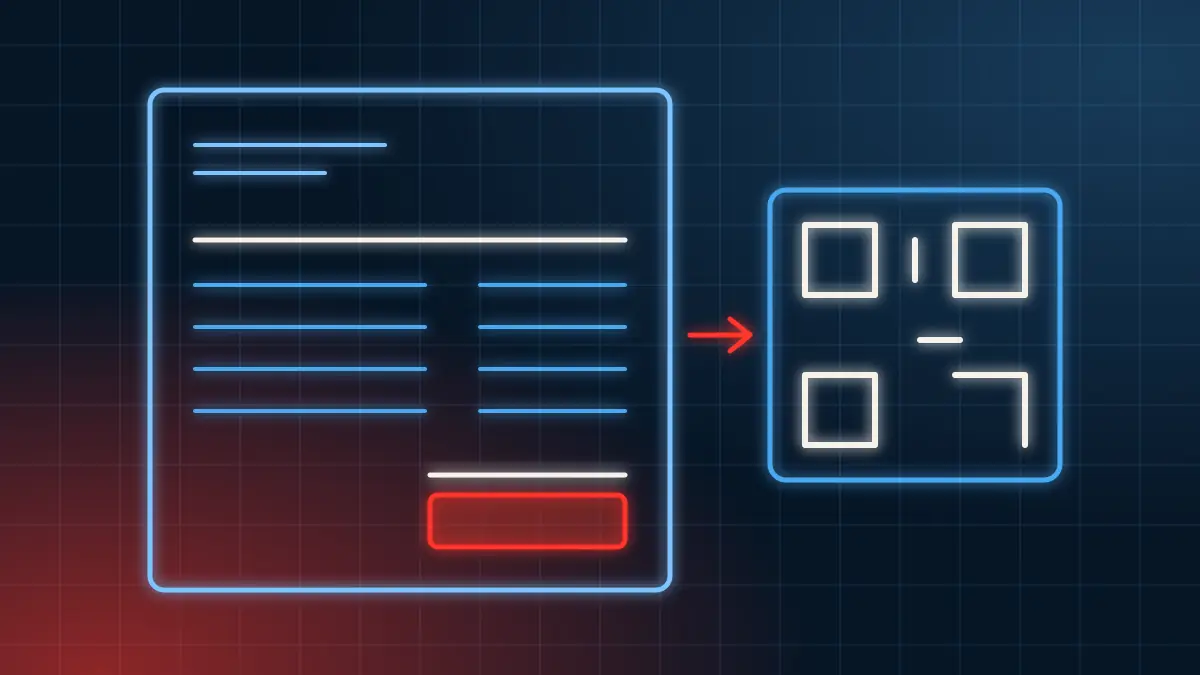
Some businesses must issue e-invoices through the government's system, which adds an Invoice Reference Number and a QR code. Rule 46 refers to this for invoices issued under Rule 48(4), based on turnover limits the government notifies.
A generator that simply prints a PDF, including ours, doesn't create that reference number. If your turnover could bring you under e-invoicing, confirm your position first.
What are the most common invoice mistakes?
Most mistakes are small and easy to catch with a final read. These are worth checking each time:
- Mistyped GSTIN: one wrong character can cause trouble for your customer as well as you.
- Repeated numbers: keep a simple record so that no number is used twice in a financial year.
- Wrong tax split: check whether the sale calls for CGST and SGST, or IGST.
- Discount in the wrong place: the taxable value should take any discount into account.
- Missing place of supply: the rule asks for it on a sale between States.
- No copy kept: save a copy of every invoice, as our tool does not store them for you.
Our free invoice generator lays out these fields and checks the GSTIN format as you type, though you should still read each invoice before sending it. If invoicing has become a daily job, our guide to where AI automation pays off looks at what can be automated, and custom software can help when ready-made tools no longer fit.
Brand names and trademarks belong to their respective owners. Criza Labs is not affiliated with the companies mentioned unless stated.
Sources
All pages were accessed on 7 November 2026.
- Rule 46: Tax invoice, Central Board of Indirect Taxes and Customs
- Rule 49: Bill of supply, Central Board of Indirect Taxes and Customs
- What is a bill of supply?, ClearTax
Frequently asked questions
What is the maximum length of a GST invoice number?
Rule 46 allows up to sixteen characters. It can use letters, numbers, hyphens and slashes, in one or more series, and it must be consecutive and unique for a financial year.
Do I need the customer's GSTIN on an invoice?
If the customer is registered, Rule 46 asks for their GSTIN or Unique Identity Number. If they are unregistered, it asks for fewer details, and more are required when the taxable value is fifty thousand rupees or more.
Is a signature required on a GST invoice?
Rule 46 lists the signature or digital signature of the supplier or an authorised representative. It has a separate clause for invoices issued electronically, so check the current text if you do not sign by hand.
What is the difference between a tax invoice and a bill of supply?
A tax invoice shows the tax charged on a sale. A bill of supply, covered by Rule 49, is the document used for certain sales where no tax is shown. A tax professional can confirm which one applies to your business.
Can I make a GST invoice for free?
Yes. A free invoice generator can lay out the fields and do the arithmetic. You remain responsible for choosing the right rate and checking the details, and businesses required to issue e-invoices need the government's process as well.